




Stories from Hohenhameln
On War and Peace
It is important to engage with the past and the causes of conflicts in order to learn from mistakes and to prevent future tensions. Peace and freedom do not arise spontaneously—they must be preserved through understanding, remembrance, and reflection.
This is especially significant for the Hohenhameln Heritage Society, as it is vital to consider the local consequences of past wars and conflicts. Only those who understand how wars have shaped life in Hohenhameln—whether through flight, destruction, loss, or subsequent social change—can foster an awareness of the value of peace within their own community. Local history renders abstract historical events tangible and demonstrates that places such as Hohenhameln are part of broader historical contexts. The culture of remembrance is therefore not solely the responsibility of museums or textbooks but also of dedicated local associations.
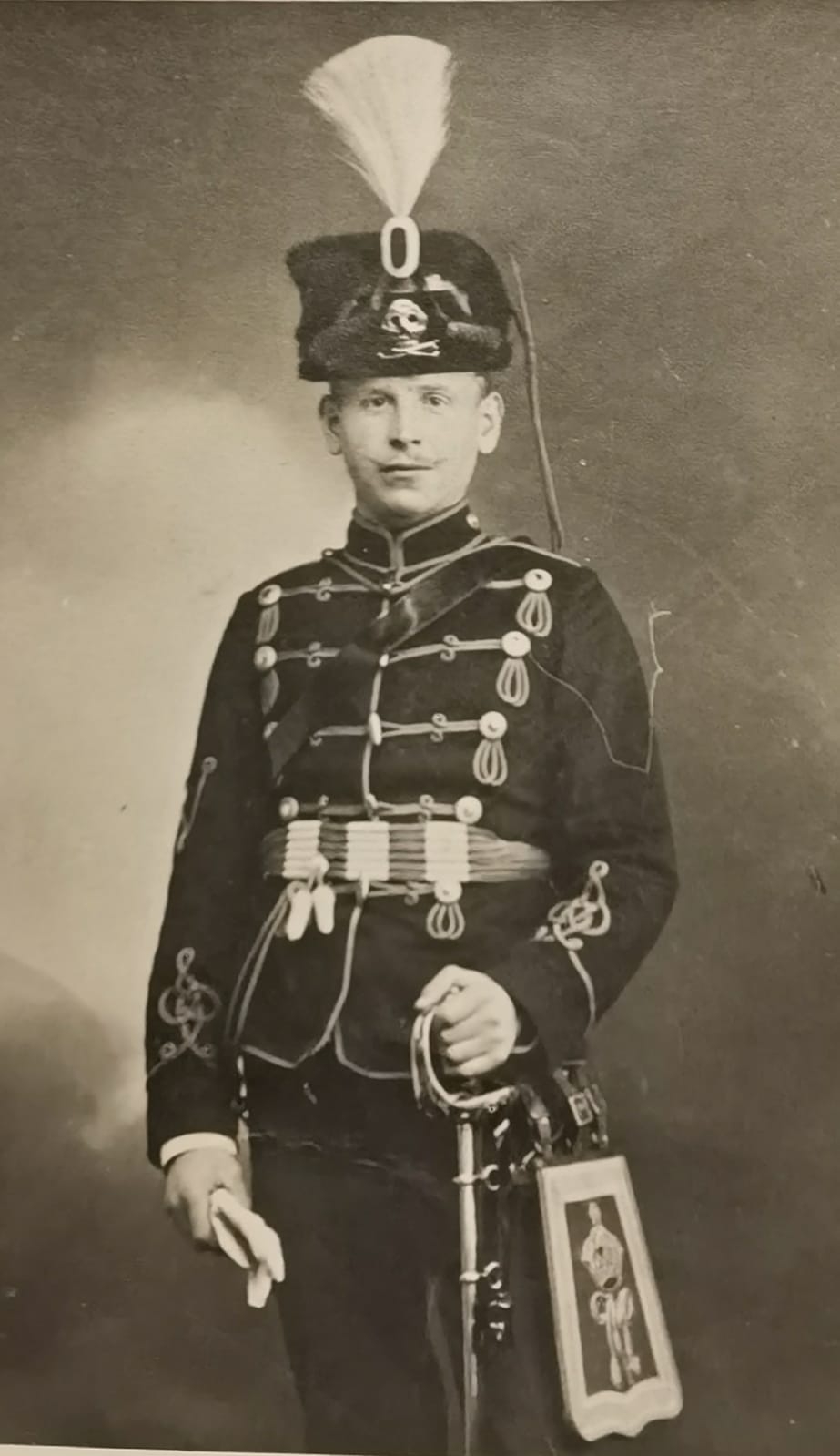
Otto Backhaus, in the uniform of the Brunswick Hussars
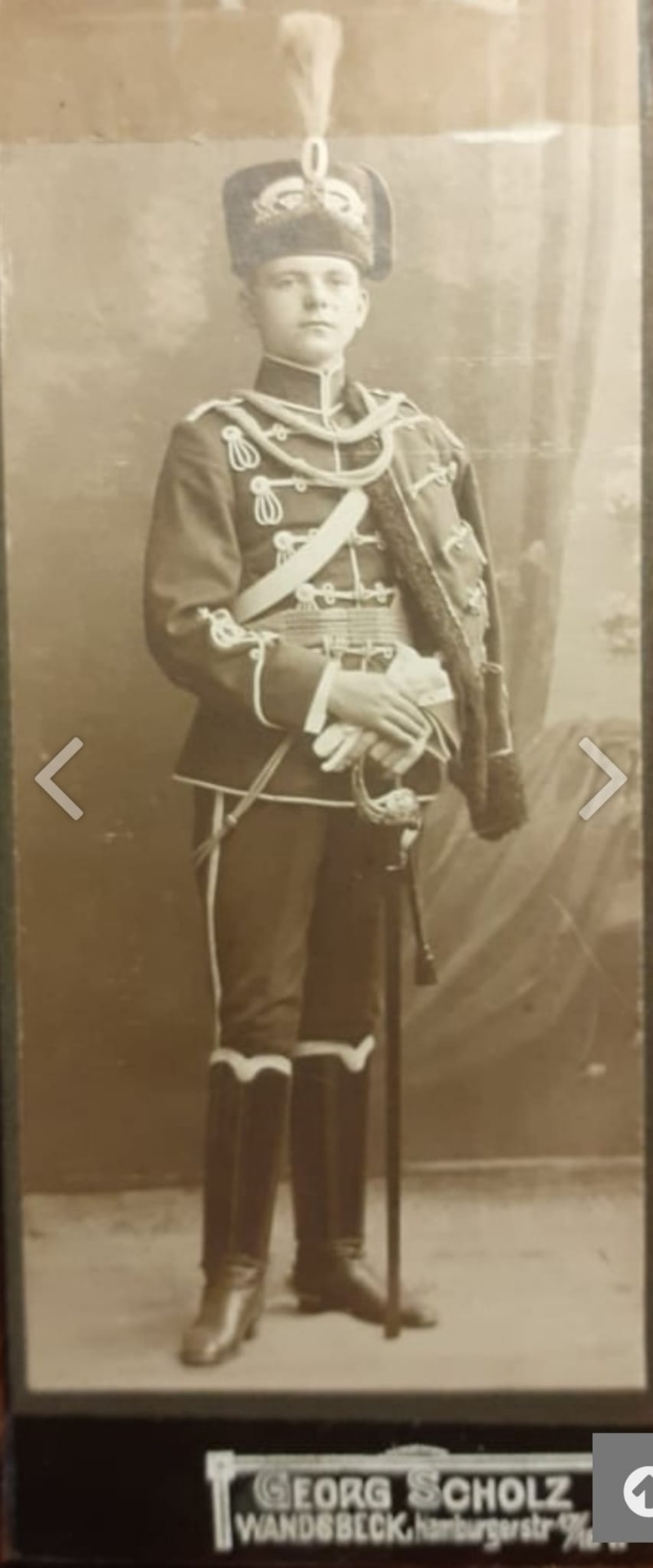
Gunner Karl Noyer, served with the 2nd Battery of Field Artillery Regiment 46 in Wolfenbüttel from 1906 to 1908.
Karl Noyer did not participate in the First World War, as he was at that time serving as a Dutch Foreign Legionnaire in Sumatra. In contrast, Ewald Bollmann from Soßmar was reported missing in August 1914.
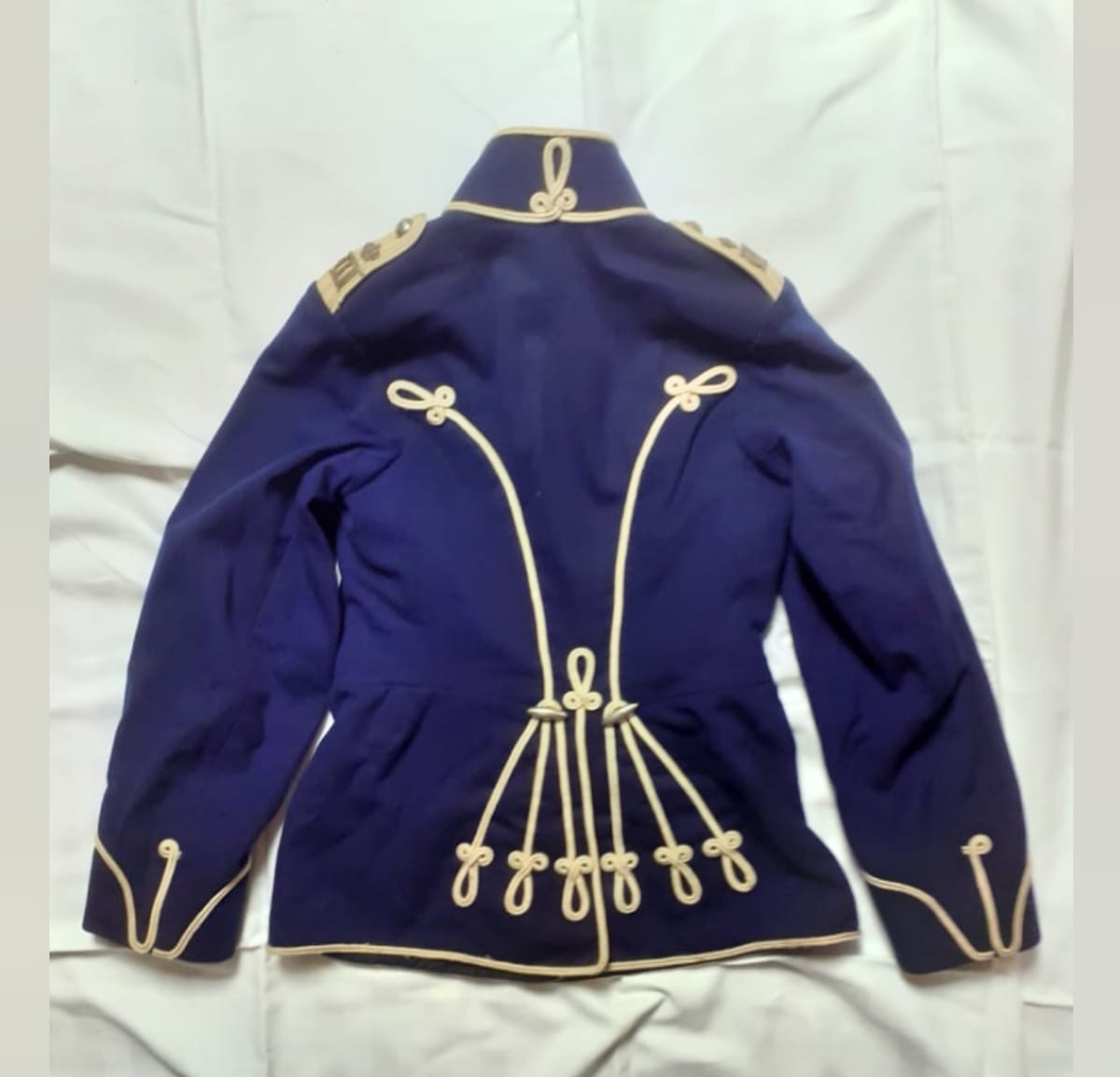
Uniform coat of Ewald Bollmann from Soßmar

Uniform coat of Ewald Bollmann from Soßmar
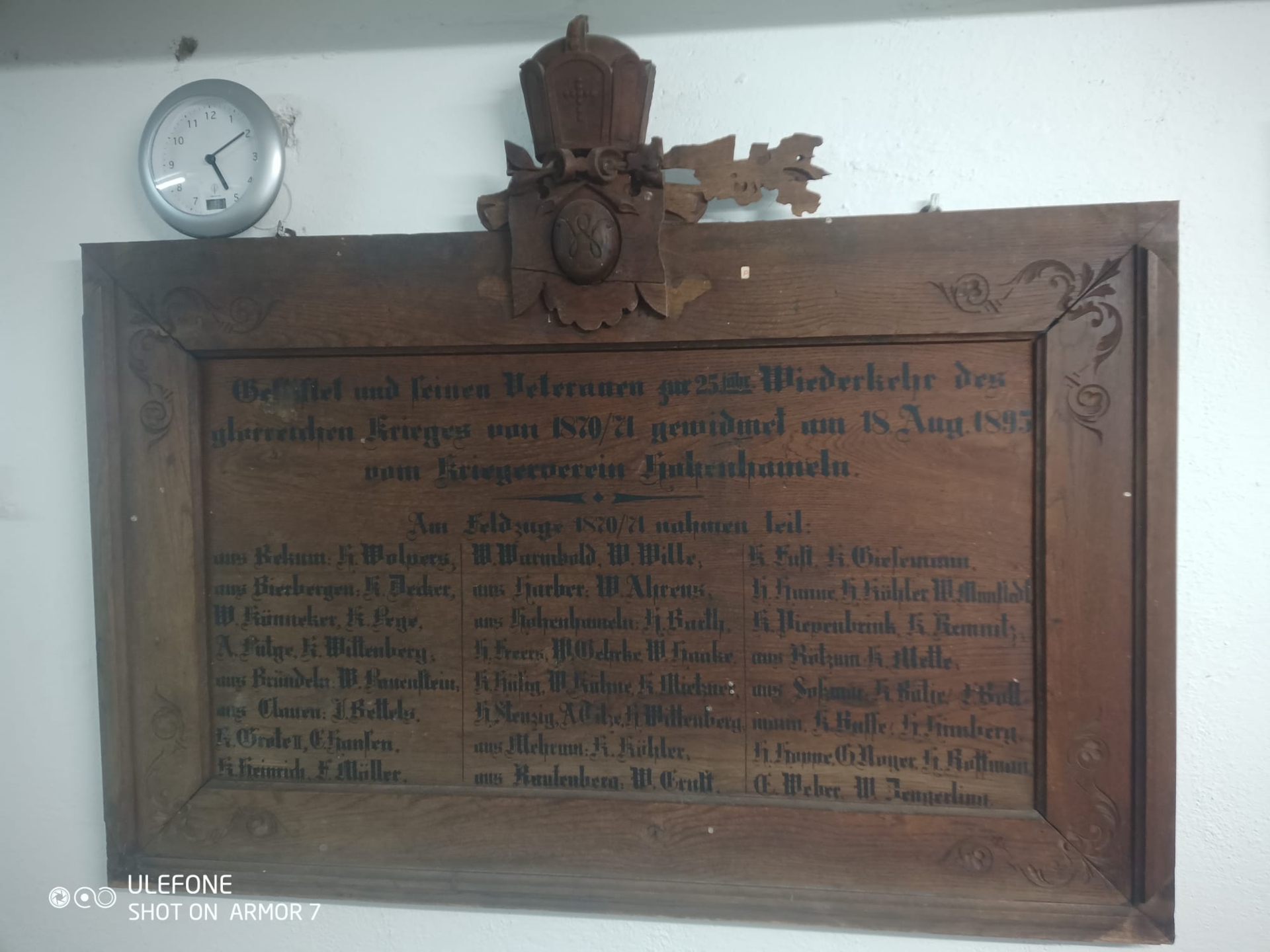
Abbildung 1: Gefalle 1870/1871
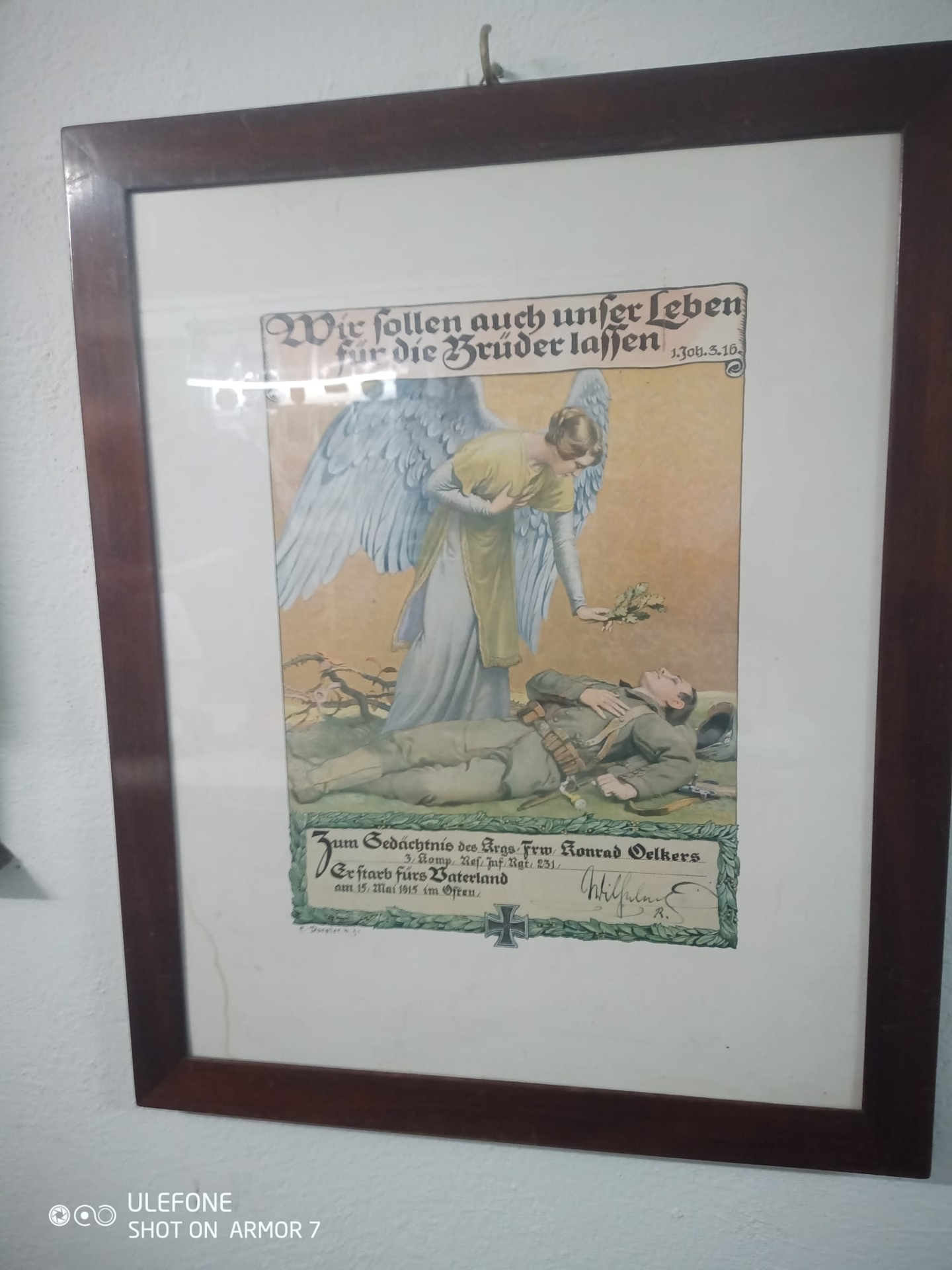
Abbildung : Rememberance for the fallen soldier
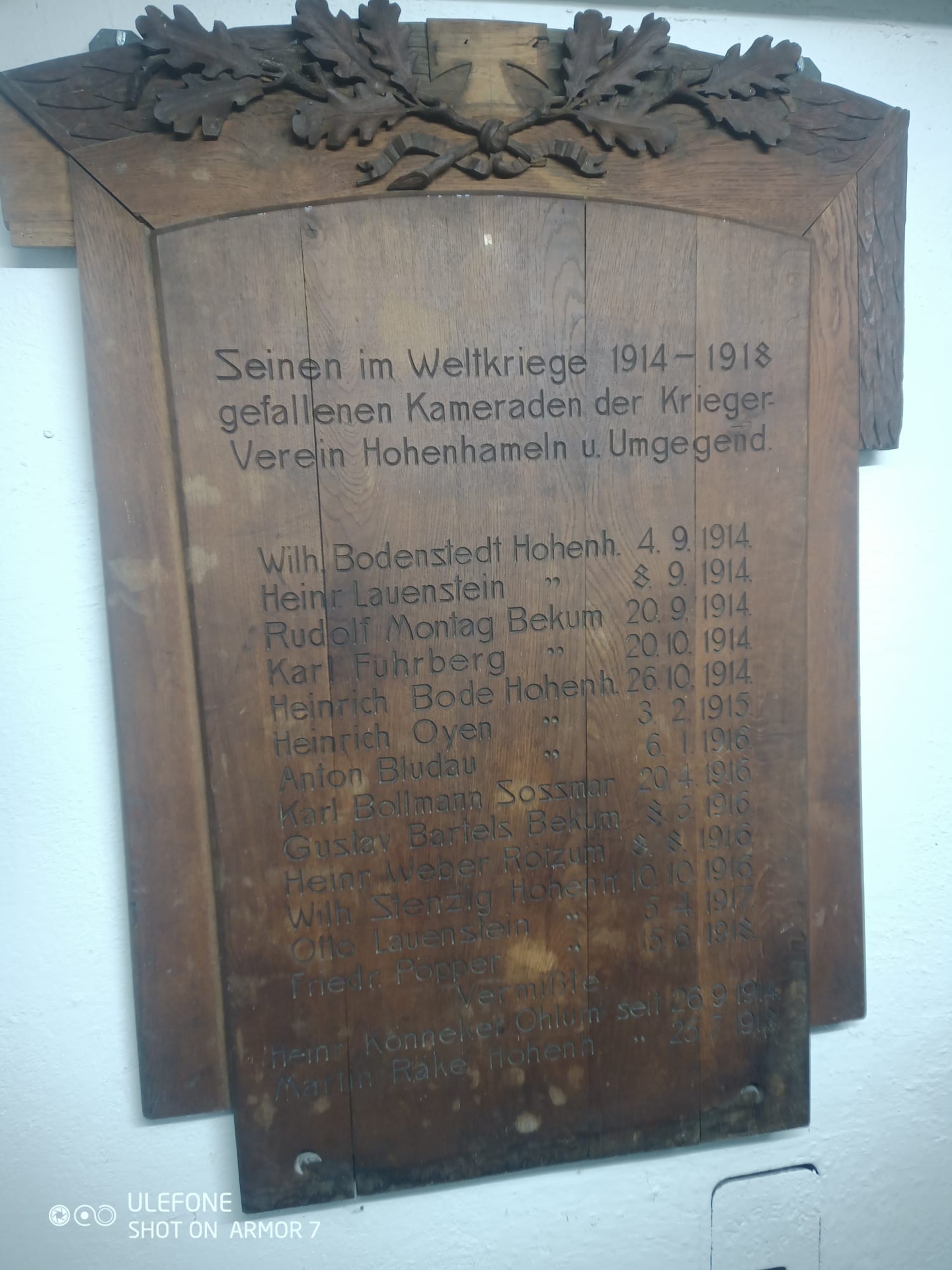
Abbildung : Gefallene Weltkrieg 1
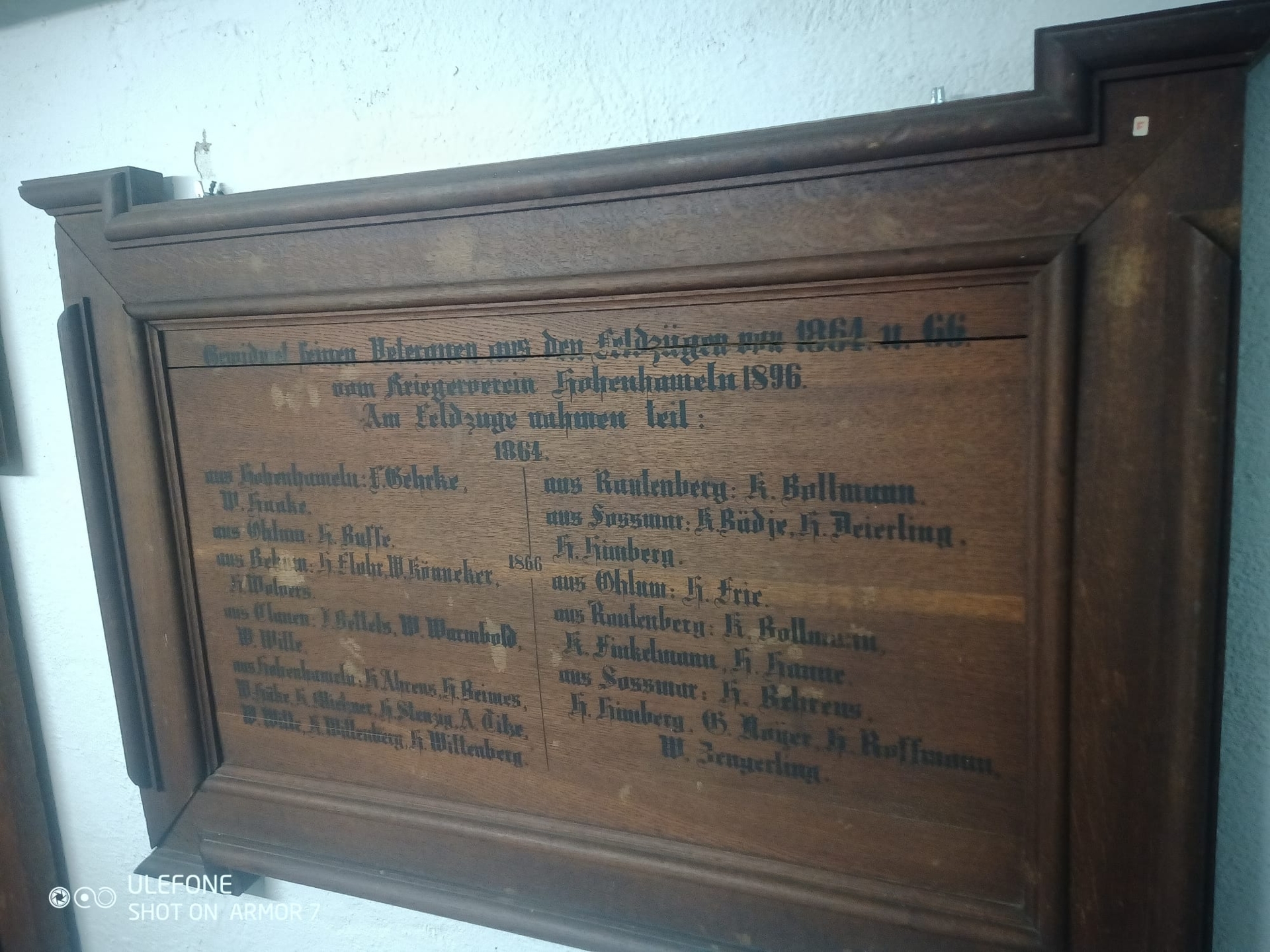 Abbildung : Gefallene 1864/66
The Sugar Beet Harvester
How the Sugar Beet Harvester Was Invented in Hohenhameln – A Piece of Technical History
The modern sugar beet harvest has its origins in our region—specifically in Harber, a district of Hohenhameln. There, in the 1920s, the farmer Otto Wilke conceived a forward-thinking idea: a machine designed to ease the arduous task of harvesting sugar beets. The aim was to precisely remove the beet leaves, gently lift the beets from the ground, and neatly separate both on the field.
Together with electrical engineer Heinrich Meisoll and locksmith Friedrich Bote, Wilke developed the first prototypes of what came to be known as the “full beet harvester” in 1927. A technical innovation was a toothed wheel, known as the “hedgehog sensor,” which detected the height of the beets and enabled precise decapitating. In 1928, Wilke patented a novel beet-lifting device that pulled the beets from the soil and deposited them in an orderly manner. At the time, the machine was powered by toothed wheels—technology later significantly improved by the introduction of the power take-off shaft.
This innovation marked a milestone in the mechanisation of agriculture. Initially horse- or ox-drawn, the first machines were later motorised and further developed. From 1936 onwards, the Krupp company assumed serial production, which was subsequently continued by Lanz in Mannheim.
After the Second World War, the patent passed to the Wilhelm Stoll company in Broistedt. This firm steadily advanced the beet harvester: enlarging the bunker, improving the cleaning mechanisms, and introducing new technologies such as the “flail” and the “post-decapitator,” which more efficiently separated leaves and beets. Additionally, the number of rows processed simultaneously increased to three—representing a quantum leap in harvesting efficiency.
This pioneering technical achievement from Harber vividly demonstrates how a local idea became a significant advancement for agriculture as a whole—a piece of Hohenhameln’s inventive spirit that still leaves its mark today.
Source and further information: https://de.wikipedia.org/wiki/Rübenroder
Der Pfannteich
The Hohenhameln Natural Swimming Pool – A Tradition Spanning Over 130 Years
The natural swimming pool in Hohenhameln has existed for approximately 130 years and originated as a pond fed solely by rainwater. From 1875 onwards, the Hohenhameln sugar factory began using the Pfannteich as a water reservoir, expanding it on two occasions. The local municipality granted permission for this, but retained certain usage rights – namely, as a public bathing facility, a watering place for livestock, and a source of water for fire-fighting.
With the closure of the sugar factory in 1963, water from the factory’s operational wells ceased to flow into the pond.
Following the dry summer of 1935/36, the municipality constructed a central water supply system, including a waterworks in Soßmar, which also served the natural swimming pool. In later years, this complimentary provision of drinking water ended when responsibility was transferred to the Peine Water Authority.
After the Second World War, during the harsh winter of 1945, all wooden structures at the pool were dismantled and used for heating. Until that time, the facility had long been operated by TSV Hohenhameln and a gymnastics club from nearby Clauen. In 1946, TSV was re-established, and the ownership of the pool was transferred to the municipality. In the 1970s, a permanent changing facility with a kiosk was constructed.
Over the years, the Pfannteich became increasingly silted, in part due to residual matter from the sugar factory and the accumulation of poplar leaves. In 1990, the local parish council initiated a desilting project, and by 1991, bathing was once again possible.
Since 2020, the pool has suffered from a lack of water following a series of dry summers. A sustainable solution for water supply is urgently required, particularly given the high rate of evaporation.
Further details and sources may be found on the website of the support association: https://www.pfannteich.de